It happens in households everywhere. A student sits down at the kitchen table, stares at a frustrating homework assignment, and finally declares that she just isn’t a science person.
As parents and educators, that’s a tough moment to navigate. Usually, this shift happens somewhere in middle school. A tricky math test or a confusing lab assignment convinces young women that their brains just aren’t wired for STEAM subjects. They decide early on to leave the math and science to the kids who seem naturally gifted at it.
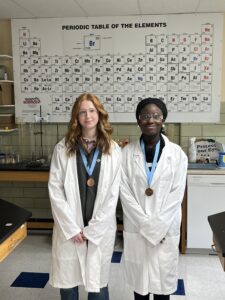
At Mount St. Mary Academy, we see this mindset a lot in our incoming freshmen. But our science department actively works to change that outlook. We know that building the next generation of female tech leaders and healthcare professionals requires a specific kind of environment. It takes a space that removes social pressure and encourages students to make mistakes safely.
To give you a better look at how this transformation happens on a daily basis, we sat down for a brief chat with our Physics Teacher, Luca Sicuso.
What is the biggest difference you notice in a student from her freshman year to her senior year?
In general, the biggest difference is her confidence and her independence. Freshmen girls typically enter the lab a bit timidly. They’re interested in learning, but they aren’t very confident in themselves just yet. They often question their own knowledge, wonder if they truly understand the material, and can be hesitant to approach a teacher with questions. In terms of study skills, they often want everything mapped out for them. For example, they might ask for study guides that have the exact same questions they’ll see on the test.
By the time they’re upper-level students, the shift is really noticeable. My senior students are quietly confident. They ask and answer questions without hesitation, and they readily approach me for feedback. They no longer need everything laid out for them;. They know when taking independent notes is necessary to grasp a concept. It shows a real maturity in their academic discipline.
How do you handle the students who claim they just aren’t science people?
This is unfortunately a very common mindset in young female students. I try to handle it by making the material as engaging as possible, and by constantly reminding them that ability in mathematics and science improves with practice. It really helps for them to see examples of women who have progressed in their lives with a science background.
Honestly, the biggest hurdle is simply the fear of being wrong. I frequently reassure them that making mistakes is a completely normal part of learning. Like good scientists, we shouldn’t be afraid to make an error in the lab. Instead, we need to focus on understanding why we made it so we can try a different approach next time.
How does teaching in an all-girls environment change the dynamic of your classes?
Because the students feel less social pressure, they’re much more comfortable participating and taking risks. Without that mixed-gender dynamic, girls aren’t worried about how they look while doing an experiment or whether they’ll be judged for getting the wrong answer in front of the boys. A lot of a student’s success comes down to the teaching approach and the classroom culture we build, but the all-girls environment definitely gives us a head-start in building that trust.
What is your ultimate goal for a student leaving your classroom for the last time?
My main goal is for students to improve their critical thinking skills, to learn how to solve problems independently, and to persist through challenges. I want them to see themselves as capable learners who can apply what they’ve learned here far beyond the walls of our classroom.
What the data shows
Luca’s daily observations line up with what educational researchers are seeing on a national level. According to data collected by Dr. Linda Sax at UCLA, graduates of girls’ schools report greater self-confidence in science than their peers in coed schools. They specifically feel more confident in their ability to use technical skills and generate their own research questions.
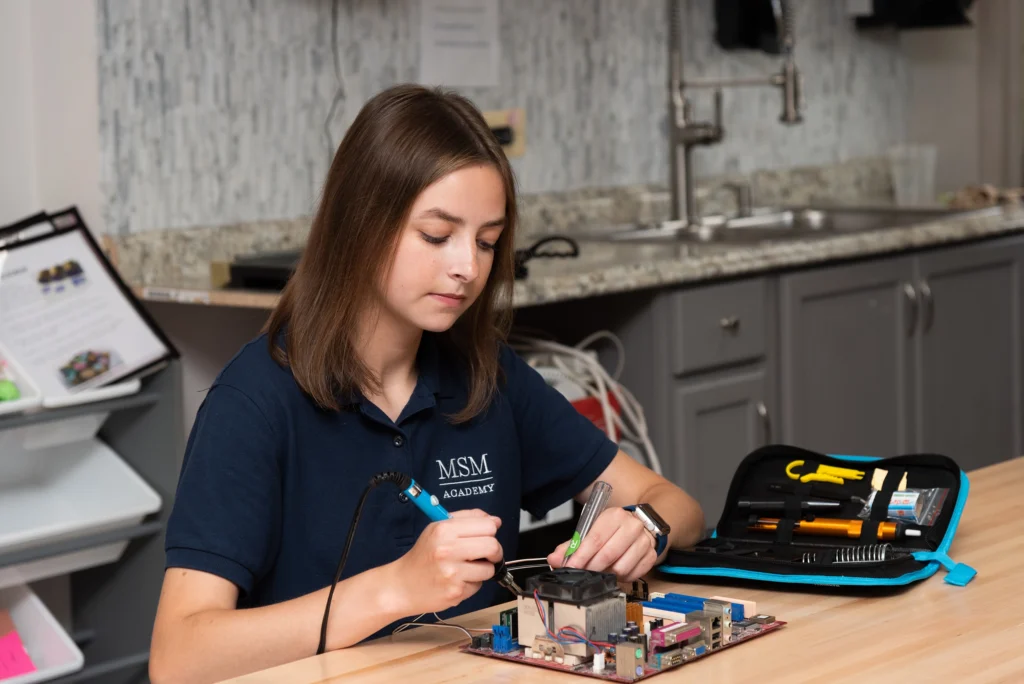
When a young woman learns how to wire a circuit or collect data without the fear of social judgment, she’s learning a lot more than just physics. She’s learning that she is fully capable of tackling hard things. And that’s exactly the kind of steady, reliable confidence we want her to carry into college and her eventual career.