
Picture a typical college seminar or a weekly corporate staff meeting. The discussion is moving fast, and ideas are bouncing around the table. A young woman has a valid point to add, but she hesitates. She waits for the right pause in the conversation, wanting to ensure her thought is fully formed before she chimes in. While she waits for that polite opening, a male colleague jumps in, talks over the end of someone else’s sentence, and steers the conversation in a new direction. Her point goes unsaid.
This hesitation doesn’t just appear out of nowhere in early adulthood. It’s a learned behavior, and it usually starts taking root back in elementary and middle school.
Educational researchers have spent decades studying how boys and girls interact in coed classrooms. The findings consistently show a gap in how students are permitted to take up space. In their 1994 classroom observation study, researchers Myra and David Sadker found that boys called out answers up to eight times more often than girls. They also tracked how teachers responded to those interruptions. When boys shouted out, teachers usually accepted the answers to keep the lesson moving. When girls engaged in the exact same behavior, teachers reprimanded them, reminding them to raise their hands and wait to be called on.
Over time, young women internalize a quiet rule. They learn to wait their turn, be polite, and only speak when they’re entirely sure they have the right answer.
This is where a single-sex educational environment changes the trajectory. When you remove the boys from the classroom, the dynamic shifts. There’s no one else to fill the silence or dominate the discussion. If a debate needs to happen, the girls have to argue the points. If a tough question hangs in the air, a girl has to answer it.
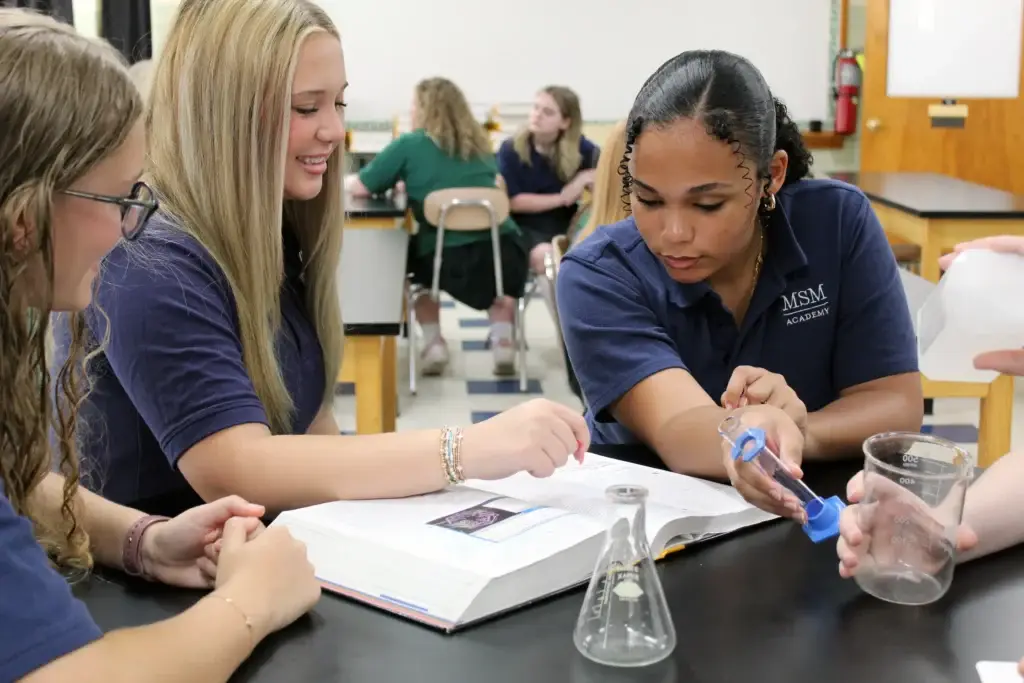
At a school like Mount St. Mary Academy, speaking up isn’t treated as a rare event reserved for a final presentation. It’s a daily requirement. Our students defend their perspectives in history, present their findings in chemistry, and push back on complex themes in literature. Because they’re in a room exclusively with their peers, the fear of judgment is much lower. They learn to formulate arguments on their feet. More importantly, they learn they don’t need a scripted thought to contribute to a discussion. A work-in-progress idea is enough.
This daily practice builds a muscle that stays with them long after graduation. Data from the Higher Education Research Institute (HERI) at UCLA highlights a clear difference in how these students view themselves as they head off to college. Their surveys show that girls’ school graduates are 10 percentage points more likely to rate their public speaking abilities as high compared to their peers from coed schools. Additionally, data from the International Coalition of Girls’ Schools reveals that nearly 80% of girls’ school students report feeling encouraged to speak their minds in class, compared to just 44% of girls in coed public schools.
Preparing a student for her career requires more than teaching her the material. It requires teaching her how to advocate for herself. And when she eventually sits in that fast-paced college seminar or that crowded staff meeting, she needs to know her voice has value. Instead of waiting for a polite pause in the conversation to share her perspective, she’ll know exactly how to lean in, take a breath, and speak.